
AI Computing
Framework Laptop 13 (AMD Ryzen AI 300)
The repairable ultraportable — Framework says every part is replaceable with the one bundled tool; swappable ports, Ryzen AI 300
AI ComputingHardware
by Meta
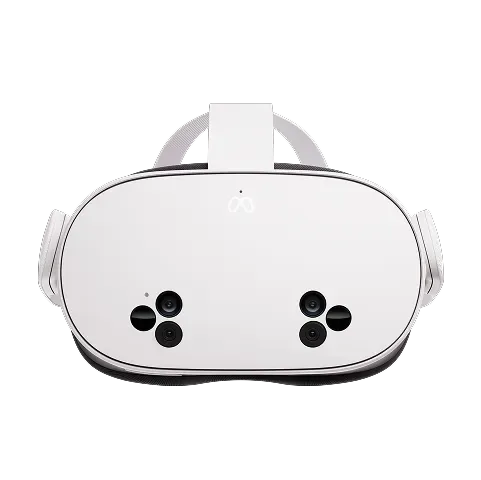
Meta's entry mixed-reality headset — Snapdragon XR2 Gen 2, colour passthrough, full Quest library, 128GB or 256GB
This page contains affiliate links. If you buy through them we may earn a commission at no extra cost to you. See our affiliate disclosure.
Best for: Per reviewers: first-time VR buyers and organisations wanting Quest 3 capability for demos and training at the lowest entry cost.
Meta Quest 3S is the cheapest credible way into mixed reality: a standalone headset with the same Snapdragon XR2 Gen 2 chip as the Quest 3, colour passthrough and the full Quest app library. It covers immersive training, demos and virtual walkthroughs. The one thing to know: Meta has wound down its business programme, so a company buys consumer units and manages them with a third-party tool.
Compare Galaxy XR and Vision Pro in AI computing.
Anyone who needs device management out of the box, or who reads fine text for hours, where the Quest 3's sharper optics justify the extra cost.
Research-based listing — not hands-on tested by Digital4All; details as of September 2026.
Reviewers treat the Quest 3S as the same headset as the Quest 3 in the ways that matter most, with optics, comfort and battery as the visible savings.
Consensus: the same chip, content library and mixed-reality features as the Quest 3 make it the recommended entry point across all four outlets; the shared caveats are lens clarity, comfort and a battery of a little over two hours, and Road to VR is the most critical of the software.
AI Computing
The repairable ultraportable — Framework says every part is replaceable with the one bundled tool; swappable ports, Ryzen AI 300
AI Computing
XREAL One Pro's closest rival — 1200p micro-OLED per eye, 1,000 nits, 52° FOV, 120 Hz, myopia dials to −4.0D, HARMAN audio
AI Computing
Apple's spatial computer — M5 + R1 chips, 23M pixels per eye, 120 Hz, visionOS; for 3D design reviews, training and demos
AI Computing
128GB Strix Halo mini PC with dual 10GbE, dual USB4 and a 3-year warranty — the quietest of four Strix Halo systems ServeTheHome tested